
Quantum News














































Australia sets ‘ambitious goal’ to build first complete quantum computer

Australia will strive to build the first error-corrected quantum computer within the decade – a huge and expensive goal that, if achieved, would put the country at the forefront of the new technology.
Cryptographers bet cash on when quantum computers will beat encryption

It is thought that quantum computers will eventually be able to crack the encryption methods we use today, but exactly when this will happen is an open question. Now, one cryptographer has started a betting pool.
India gives itself a mission to develop a 1000-qubit quantum computer in just eight years

India’s government has signed off on a ₹6003.65 crore ($730 million) plan to make the nation a quantum computing and communications power by the year 2031.
Physicists take step toward fault-tolerant quantum computing

Cornell researchers have recently taken a step toward fault-tolerant quantum computing: they constructed a simple model containing exotic particles called non-Abelian anyons, compact and practical enough to run on modern quantum hardware. Realizing these particles, which can only exist in two dimensions, is a move towards implementing it in the real world.
Eun-Ah Kim, professor of physics (A&S), “With this 10-qubit system, we were able to encode multiple non-Abelian anyons, and therefore multiple logical information-carrying qubits, and a precise recipe for what the experimentalists need to do every step of the way.”
Prosperity at Risk: The Quantum Computer Threat to the US Financial System

Due to the deep interconnectivity of the financial sector and the vulnerability of equity and credit markets, the US financial system is at risk of a quantum-enabled cyberattack. The consequences of such an attack could be catastrophic for the US and global economy, potentially surpassing the impact of the 2008 financial crisis or the Great Depression.
Japan quantum computer debut sets off scramble for tech breakthroughs
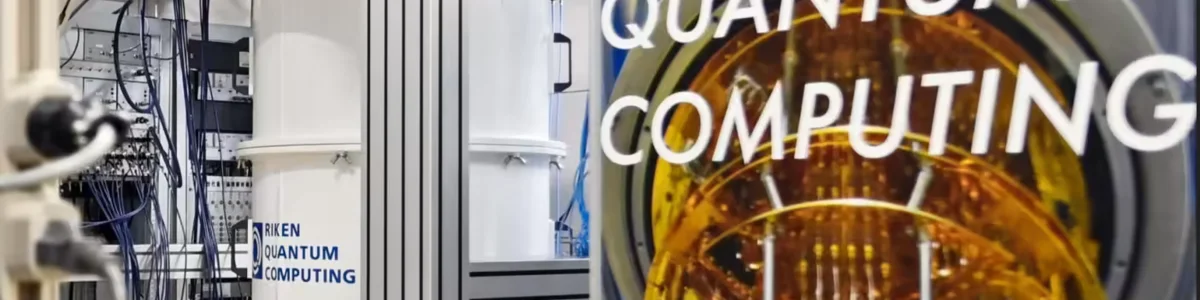
Riken’s first homegrown quantum computer could transform auto, finance, chemical, and pharmaceutical industries. The government and Riken plan to connect an over-100-qubit quantum computer to the Fugaku supercomputer in fiscal 2025. Fujitsu plans to finish a 64-qubit quantum computer in fiscal 2023 and 1,000 in 2026. Fujitsu will collaborate with Fujifilm and Tokyo Electron, while Riken will research Japanese businesses and universities.
Quantum computing may help develop new materials like electric-vehicle batteries and artificial photosynthesis. In 2022, NEC started using quasi-quantum technology to plan parts deliveries, hoping to earn 10 billion yen ($76 million) from optimisation services by 2025.
Nvidia positions for quantum computing with new products
With new software and hardware, Nvidia Corp (NVDA.O), which powers most AI, is positioning itself as a quantum computing leader. Nvidia unveiled CUDA Quantum, a platform for building quantum algorithms in C++ and python, at GTC on Tuesday. The programme would run the algorithm on quantum and classical computers to find the most efficient solution. Nvidia’s DGX Quantum hardware system connects quantum and classical computers. It is unclear when quantum computers could perform some calculations millions of times faster than the fastest supercomputer. Researchers can create hybrid applications and crucial quantum computing methods with DGX Quantum.
UK to invest £2.5bn in quantum computing drive

The UK government is investing £2.5bn in quantum computing to keep the UK competitive in one of the world’s fastest-moving fields. The National Quantum Computing Centre will play a leading role in the expanded programme. The UK has the most quantum start-ups in Europe, with a new government programme to boost homegrown companies and address the shortage of qualified workers.
SpinQ Introduces Trio of Portable Quantum Computers

SpinQ Technology, a Chinese company based in Shenzhen, has introduced three new portable quantum computing products aimed at educational use: the Gemini Mini, the Gemini, and the Triangulum. These devices are designed to make physical quantum computing more accessible, though they feature limited capabilities with qubit counts maxing out at three. Utilizing nuclear magnetic resonance (NMR) spin qubits, these systems operate at room temperature but face significant scalability issues and lack key quantum features like entanglement. The Gemini Mini is an entry-level two-qubit system priced around $8,104, while the more advanced Gemini and Triangulum models offer increased complexity and coherence times at significantly higher prices.
Amazon hosts a first in Quantum computing: Aquila, a neutral-atom Quantum computer
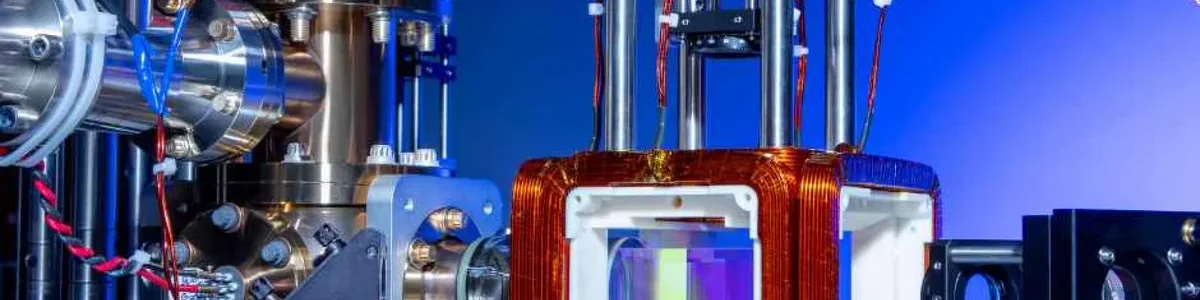
Amazon Web Services (AWS) is hosting Aquila by QuEra, the first publicly available neutral atom quantum computer on Amazon Braket.
For Aquila’s 256-bit neutral-atom quantum processor, Qubits are laser developed in a vacuum chamber, where a cloud of rubidium atoms is trapped by magnetic fields. Laser light then is used to capture individual atoms of that cloud, holding them like tweezers, and constraining their motion so that they are effectively chilled to close to absolute zero.
Join our mailing list, contact the team or join our vibrant and friendly community of users, developers and enthusiasts on Discord or one of our other social channels